
Gestures

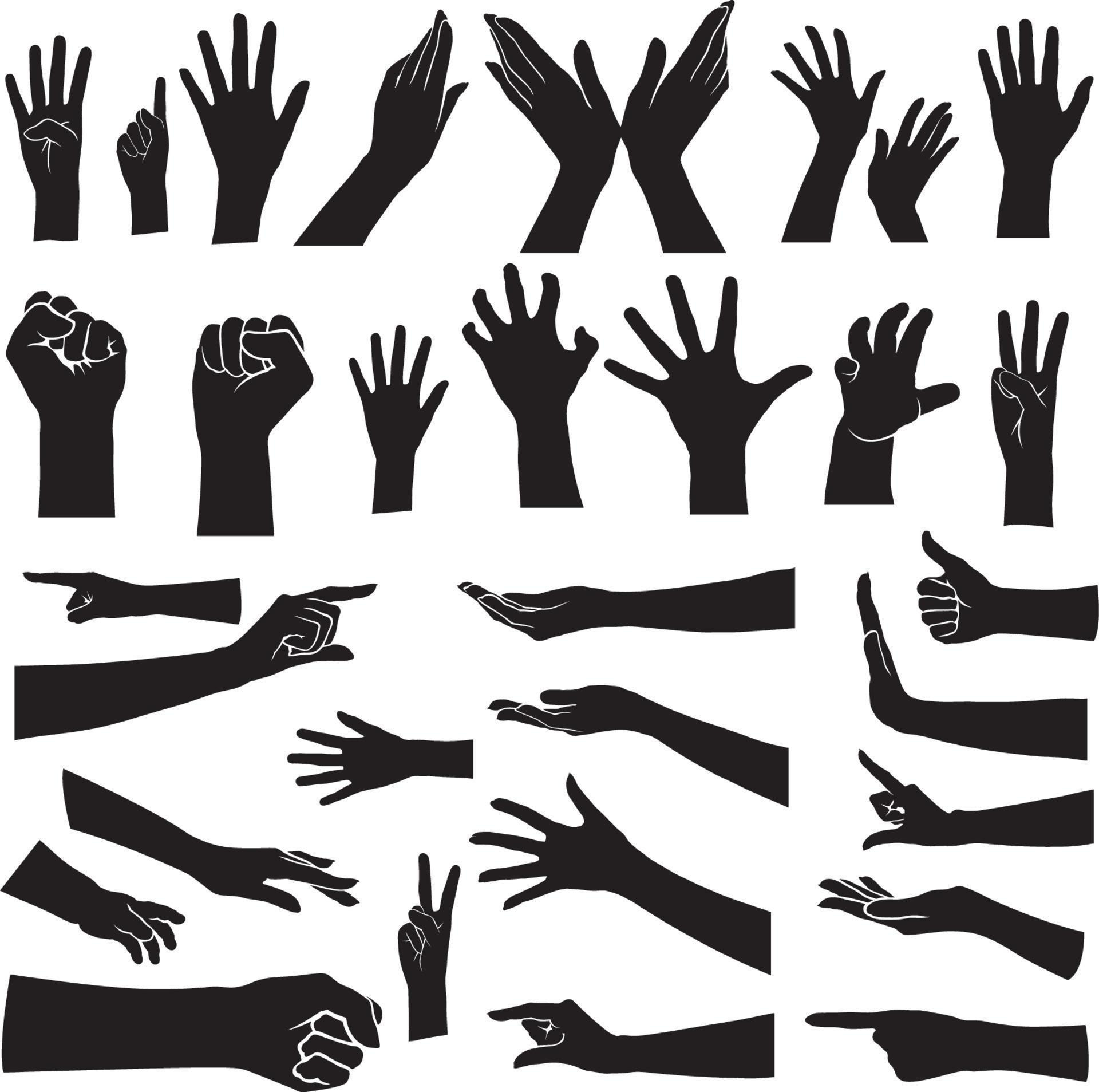
When I first came to Japan I was keen to make as many friends as possible and so I went to quite a few parties. Invariably cameras would come out at some point and a few of us would crowd round each other for a group picture.
I soon learnt that it was de rigueur to arrange yourself into a cute or funny pose. By far the most common (particularly for girls) was either a single or double-handed “peace” gesture where palms face outward and the index and middle fingers are held up in a “V” shape.
Occasionally, I’d see someone perform this gesture with palms facing inward. I was shocked by this at first because in the U.K. and some other English-speaking countries, this version is used as an insult. In Japan of course, it’s perfectly fine.
Hand gestures are something we probably use daily but it’s easy to forget that different cultures may attach different meanings to some or use completely different gestures to mean the same thing.
In Japan, it’s worth bearing in mind that the choice of gesture very much depends on who you’re talking to and your relationship to them.
With that said, here are a few general differences between Japan and the U.K.
Me
Where do you point when referring to yourself? In the U.K. I learned to point to my chest. I always imagined it was something to do with pointing to your heart, perhaps dating from a time when people thought the heart was the seat of the soul.
In Japan, people, especially kids and the elderly point to their noses to indicate themselves so naturally this gesture has now become second nature to me too.
You
In the U.K. when indicating a person it’s important not to point with your index finger as this is considered rude. Pointing at someone like this in Japan is a much more offensive gesture, and even directions and objects should be indicated with a flat, open palm gesture.
OK
In the U.K. we generally signal that something is ok by forming a circle with the thumb and index finger and holding the palm vertically.
Japan has a similar gesture where the palm faces upwards but here it is used to mean ‘money’ with the two fingers representing a coin.
A much safer gesture is to raise both arms and form a circle overhead your head. An advantage of this signal is that it can easily be seen from a distance.
Yes
If you’re looking to agree with someone who is physically closer, a more common gesture would be simply to nod your head. This is of course the same in the U.K. but in Japan, frequent small nods while someone is listening indicate that you are following along, not necessarily that you agree with what is being said.
No
Like the “OK” gesture, in Japan, you can say no by crossing your arms above your head but up close, waving one hand from side to side in front of your face is perhaps more common. This can also be used to signify “I don’t know” or “not me”.
Good
The thumbs up gesture we sometimes use in the U.K. is also generally understood here but is far less common, perhaps because in some contexts it can also be interpreted as referring to a man or male lover.
Bad
In the U.K. we may indicate our disapproval of something with a thumbs-down gesture. However, in Japan, this is considered highly offensive meaning something like “Go to Hell”.
To signify disapproval it is better to just cross your arms in front of you.
Come Here
In the U.K., if you want to beckon, you would extend your arm and either curl your index finger or wave all your fingers towards you with your palm faced up.
In Japan, this gesture involves waving your fingers towards you in the same manner but with your palms faced down. This gesture can be seen in the “Mineko-neko” or “lucky cat”, a familiar Japanese lucky charm used to attract customers and money into a place of business.
Go away
Here’s where things get complicated. This gesture in Japan looks superficially similar to the “come here” gesture in the U.K. with the palm faced down except that to shoo someone, you wave your fingers away from the body.
Excuse Me
While we don’t really have a hand gesture in the U.K. to signify“excuse me” when wanting to get past someone, in Japan, there is a fairly common one in this situation. Sometimes known as the “hand chop”, this involves holding the hand vertically and moving it up and down accompanied by a small bow. Useful when entering a packed train.
Counting
When counting on my fingers as a child, I would start with my left thumb, (because I’m left-handed?) and count up to five before switching to my right thumb, finishing at my right pinky.
In the U.S. it is apparently common to start with the index finger, down to the pinky with the thumb last on each hand. Japan is the same but with the numbers six to nine counted on the palm of the first hand. Ten is both hands both hands open, palms out.
Bonus
Love
For young girls in Japan, a popular photo pose is to make a heart gesture signifying love. This can be done with both hands together with thumbs and index fingers forming the shape of a heart. Sometimes this is done with a friend, each person forming half of the heart.
In recent years the finger heart or “K-pop heart” has also become increasingly popular. This involves placing the thumb and index finger together like a snap, forming a tiny heart.
I really loved this piece Alex ❤️
That was really interesting, Alex, especially as I’ve been through something similar. The Turkish version of “up yours” is a brilliant gesture where you put your thumb between your fingers and then sort of slap it. It’s totally my personal favourite way of telling someone where to go. Also, the “OK” sign in the UK is used here in a derogatory way to suggest someone is gay. Wars have been started over less!